Showing posts with label Rose soil & care. Show all posts

Sunday, August 13, 2023

Why no digging is better for our soil


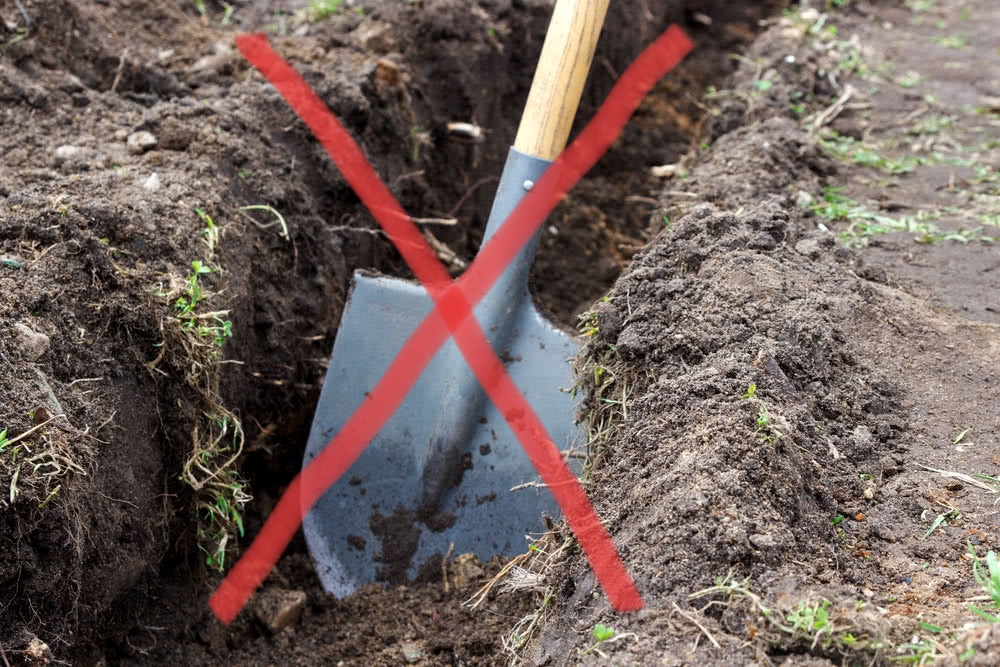
Until two decades ago it was considered completely normal to digg the soil of our gardens and vegetable plots / beds. People learned it from their ancestors and I can still see my grandfather digging in cow manure each year in March. But science hasn't been dormant and today we have much more scientific knowledge about how the soil works.
When we look in forests or countryside we see healthy growth without digging or interference. The soil in nature doesn't need digging to bring air and organic material in. There are very good reasons why that's the case:
Remember my emphasis on the topsoil containing the black gold called humus? Well it's that upper layer of soil which hates digging. Our layer of topsoil contains billions of good bacteria and they digest the organic material which falls on that topsoil. With the help of earthworms that topsoil is one big busy energy factory making all the goodies for our roses and other plants. They also get help from Mycorhizza fungi in breaking down organic matter. It's a giant network underneath the surface. 
What happens when we dig into the soil and flip it over? Or what happens when we bring in organic material into the topsoil? All organic material which breaks down needs oxygen to do so. The bacteria need it. So when we dig in organic material like compost or manure the bacteria in that organic material gets deprived of that necessary oxygen and what happens? They extract it from the topsoil, from the humus layer. This is very bad for our plants as the roots need oxygen. If we spread out our compost, worm castings, composted cow and horse manure as a mulch it will extract the much needed oxygen from the air with no harm for the topsoil. 
A second problem that occurs when we dig and flip soil over is that the bacteria living in the topsoil get exposed to UV light and die. In the soil are lots of anaerobic bacteria working day and night to produce healthy soil but when they suddenly get exposed to the air and oxygen they also will die. We intervene in a perfect working process by digging and it has big consequences for our soils.
So the best way to create a healthy soil is to leave it alone as much as possible and to give it each year a thick layer of organic material on top of the topsoil. Nature will do the rest. 
Sunday, February 5, 2023

February humus mulching

February is the ideal month to give your soil a good portion of organic material. Remember that a thick organic humus top soil is THE key to beautiful and healthy roses. What are good humus providers? Granulated cow manure, composted manure, composted manure with seaweed, compost, worm compost etc..
Important rule: The more the better! You can't burn your roses with humus providers, it's not a fertilizer. 
A layer of minimum 5 cm is advisable, more is better.
Now is also a good time to give volcano rock dust. It brings essential elements and minerals into our soil and makes the soil more airy. You can give a handful around the foot of your roses. Just work it in lightly. 
And now your roses are ready for pruning by the end of this month! 

Sunday, January 15, 2023

Roses pegging down

Rose pegging: An introduction

Pegging is simply taking the arching canes of a large shrub rose and tying them back down to the ground, or even back to the plant itself.

We do this for a couple of reasons.  First, it keeps the rose under control.  Second, it creates more flowers – a LOT more flowers.

When a rose cane is trained horizontally all the little bud eyes along the cane send up new side shoots (also called laterals) and at the end of each one a rose bloom will appear.
It’s actually a lot easier than you think and the effect is wonderful.  

Here are a few rules of thumb:

It’s easiest to do this when the rose canes are young and pliable.

If you try this with an older cane that seems resistant to bending do it in stages.  Bend the cane as much as you can, secure it and in a few weeks try bending it a little more

You can keep the rose tidy by trimming back the side shoots after each flowering just like you would on a climbing rose. 

Make sure what you use to tie the rose with won’t cut into the cane.  Don’t use materials like wire.  Instead use plant tie or something soft.

The easiest way is to use bamboo canes. You stick them into the ground or you use a 🔨 when the soil is hard. Now you bend the long cane towards the bamboo cane and you tie it to it at ground level. But you also can use Hazelwood canes or willow canes.

Which roses are most suitable? Bourbons, Hybrid Perpetuals, strong English roses from Austin etc. They need to make thick long canes and if that's the case they are suitable

What is growing roses organically?

Growing roses organically is the only way to go

I've spoken to so many rose lovers the past year and mostly all grow their roses (and their gardens) organically. Today I spoke with Isabelle Olikier Luyten. She has a stunning garden with roses combined with perennials. Nearly all her roses are from Warren Millington.
She told me her biggest secret: Mycorhizza and as many organic material as possible. I'm gardening this way for a few years now but she insisted on saying I had to give more organic material. She uses Secret Vert fumier de ferme (Green secret, manure from the farm). This is a French/Belgian brand of organic manure, Fertilizer and potting compost.
She always uses Mycorhizza when she plants new roses and in March she gives each rose 2 kg!! Of that secret vert manure. Even to my standards that's a huge amount but she says that's her secret! More is better in Organic gardening. You have to improve the humus content of your soil. Secret vert is made up from cow/horse/chicken manure and seaweed! All organic.
If you give your roses each year two kg of manure your soil will transform in one big humus paradise. It's the nr one step to fabulous roses.
For our members not living in France or Belgium: Organic manure from every good USA or UK brand is equally good! Just give the 2 kg per rose in spring and use Mycorhizza when you plant the roses.

I've told you guys many times that Mycorhizza fungus dies when artificial fertilizers are used. Mycorrhiza fungus forms a symbiotic relationship with our roses and any other plant in our garden. The fungus triples the amount of roots so itself and the roses can take in more goodies from the humus. So we need to keep adding organic material to our rose soil in spring.
If you haven't switched to growing roses organically now is the time to start. This means that you can't use artificial fertilizer. If it doesn't say organic on the label it's no good. You need to give plenty organic material to your roses as mentioned above. You can't spray with chemicals, SO NEVER!
Uphold this important rule: Nothing leafs the garden! This means that all organic material from the garden (cut branches, cut grass, leafs etc must be shredded and turned into compost or mulch and given back to the soil. But Dirk but Dirk what with leafs infected with blackspot or rust? Yes those leafs can go into the bin 🚮 if you are scared to spread it. The latest insight on Blackspot is that this fungus only can infect weakened roses. Also the blackspot fungus is airborne. You can try to keep your garden blackspot fungus free but with every wind hundreds of spores are dumped into our gardens. If you don't have blackspot in summer it means your roses are being treated excellent and are resistant to the fungus. A wet and rainy summer is the ideal basis for blackspot but if you treat your roses the right way they can resist it as long as possible. Humus in combination with mycorrhiza strengthens the leafs, making them harder and less easy to penetrate by the blackspot disease.
I'm talking to experts on a kind of rose tonic which is applied onto the leafs each 15 days in spring and summer and this blocks blackspot and mildew fungi. When I've got more information about this natural organic tonic I'll share it with the group

What is humus and why do we need it?

Humus: The black gold in our garden

Roses can't live without humus, its their source of life. Humus is broken down organic material that's ready to be eaten by roses (and nearly all other plants). It's also the life source of the Mycorhizza fungi, it thrives in it and needs it badly. It is essential to feed our top soil with humus, at least yearly but better is every six months. Yes Dirk but what's the use of the rest of the soil our roses are standing in? That's our substrate where our roses anker ⚓ themselves in. It can be made up of clay, lime, sand or a mixture of all these. Our roses don't feed from this substrate, they feed on humus and the nutrients that are released from the humus. Now you also know the difference between organic and chemical fertilizer. Organic fertilizer creates more humus and releases its nutrients slowly thanks to the good army in the soil like bacteria, worms, woodlice etc. Chemical fertilizer however is man made chemical stuff without the components to create humus. It's empty calories and can give your roses a boost but soon your soil is dead and filled with salts, a rest product of chemical fertilizer. It's also deadly to the Mycorhizza. Mycorhizza hates artifical fertilizer.

Lets take a walk in a forest. Go sit down on your knees and scratch the top soil. We see broken down leafs, a thick layer of composted leafs. It's brown and smells like.... A forest. It's pure nature in your hand, the circle of life.
That's the type of top soil we have to create in our garden. There are different ways to achieve that and they are quite cheap. You can make your own compost from your organic leftovers like vegetables, fruits, newspapers, straw etc.
You can buy a Vermicomposting box and throw all your leftovers in that box and the good worms will transform it into gold. We are talking about good worms, no maggots 🤮
You can mulch with fallen leafs in autumn and lay a thick layer between and around your roses. You can make your own leaf compost by gathering leafs in black plastic bin bags. Prop it as much as possible but so you can still close it. Now add a bucket of rainwater and close the bag(s). Put them in a sunny spot and open them in let's say April. If the leafs aren't yet composted you wait a bit longer but it's best when the leafs are broken down by half. So it's good when there are still pieces in it. Use it as a mulch. A thick layer of 5 cm minimum! It will feed the soil, keep it moist in warm summers. To enhance it you can mix the leaf compost or wormcompost with Vulcano rock dust (Lava meel). This contains super good essential minerals and other elements for our roses. A few handful of dust is enough for twenty liters of compost.

Cow or horse manure: Very useful. Fifty years ago we had thousands and thousands of farmers in Flanders and good rotted cow manure was available in abundance. It was black gold and filled with red manure worms. My grandparents had cows and a big pile of cow manure. After one or two years that manure (with straw) was turned into black dirt and it smelled like forest soil. Times have changed and today its not that easy anymore to get such cow manure. But we have granulated cow manure. That's that same manure but dried and heated to kill all bad pests and bad bacteria. You can buy it in garden centers. Don't be a cheapskate and give your roses a thick layer of granulated cow manure around the roots. More is better. Again you mix it with rock dust.
Ordinary compost in bags or bigbags: Very useful and can be applied like the rest, as a mulch.
Tip: Before applying compost or granulated cow manure as a mulch first water your soil until it's soaked and then you can apply it.
A good garden is a garden that gives everything back to the soil.