Showing posts with label Climate change and our roses. Show all posts

Wednesday, November 8, 2023

Climate change from my point of view and what to do in our gardens part II

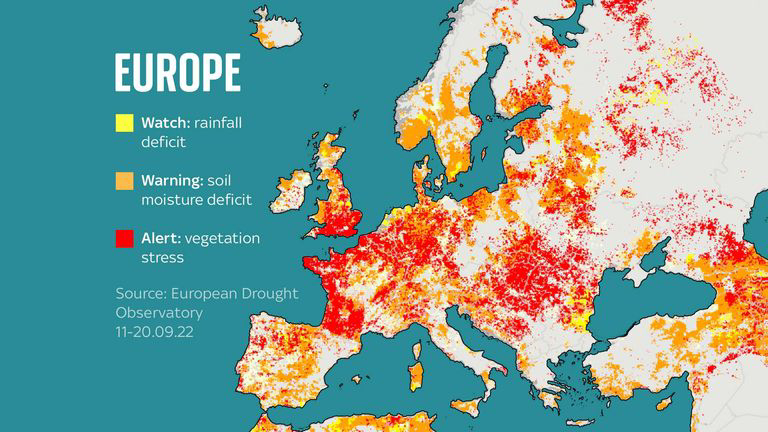
Since 2013 climate change became really visible in Flanders, Belgium. Before that it went slowly but as of 2013 you really could see and feel the changes. More dry summers, more heatwaves, wet and mild winters and spring starting earlier nearly each year. This doesn't mean we always had scorching hot and dry summers and very mild winters but with almost 50% increase it's still mind-blowing. From 2017 till 2023 we had one normal "Belgian" summer being 2021 with all others being way hotter combined with long periods of drought.

We had to start adjusting our garden to these hot and especially dry summers as we saw our ferns dying off, shrubs loosing foliage and even roses dying. You can water your garden on a daily basis during hot summers but it's a very costly business and it isn't sustainable is it? No, we had to make changes and we immediately decided to turn the garden into an ecological and sustainable place for us and wildlife to thrive, even during hot, dry summers. 
We already had three water Features, hedgerows made from willow twigs and pruning wood from the fruit trees, shrubs and roses. This already attracted a massive amount of wildlife and good beneficial insects. Chemicals got banned completely and the main theme was: What goes into the garden stays in the garden so we try to recycle everything.
If you want a drought resistant garden you know you have to protect your soil from drying out. The best way to do this is by mulching the soil with a thick layer of organic material. We use composted farm manure and garden compost and we make a thick layer of approx 15 cm or five inches. Each November we give a new layer. It prevents the soil from evaporating moisture during dry weather so your roses and perennials don't need extra watering the first weeks of drought.
Having plants which demand wet and moist soil isn't really a good option if you don't want to be a slave of watering each evening in summer. No, you need rather drought resistant plants and the mulching allows us to plant whatever thrives in normal soil. Once flowering shrub roses and ramblers, Tea and China roses, prairie perennials such as Echinacea, Rudbeckia, Helenium, Phlox, lavender, Perovskia (Russian sage), Geraniums, Penstemon and Salvia are just some examples of plants that will do well in dry conditions.

Of course we also have roses in pots and I can't escape watering them almost daily during hot dry weather but we use rainwater for this purpose. 
If you really want more beneficial insects and pollinators you have to choose those families of plants that are native to your home country. They don't have to be the wild varieties, the cultivated ones are just fine. Why? Our local wildlife has been living with our local flora for thousands of years and they get the most nutrients from these plants. So even when you fill up your garden with let's say blooming Agapanthus or Jasmine or other non native plants the pollinators will visit them but they can't get the same amount of nutrients from them than from local flowers. You can have non native plants of course but the majority must be local ones.

With these few tips you're already on your way to a sustainable garden ready for climate change. 

Tuesday, November 7, 2023

Climate change from my point of view and what to do in our gardens part I

I was born in 1973 in Haspengouw, the fruit region of Flanders in Belgium. My first memories are seeing me playing in front of the Christmas tree with its typical seventies multicolor Christmas tree lights. When I looked out of the windows I saw snow, heavy snow and frost flowers adorning the glass, we had only single glass back then. We lived on a rather busy street but in those seventies I remember the street being completely auto free due to a thick layer of snow. My father took us (me and my older brother) on the sleigh and we could ride on the street without seeing a car in half an hour. Those severe winters are imprinted in my memory. Summers were moderate, heatwaves were rare and most of those summers were rainy. Temperatures in summer were moderate with the highest temperature being 33 degrees.

In the early eighties I remember that during winter lots of kids at my catholic school came to school with the sleigh ๐Ÿ›ท so winters were fairly snowy and cold but towards the end of the eighties snowfall became less and temperatures in winters seemed milder but at that time we thought it was temporarily and that it would become normal soon.
Early nineties my grandfather, a dairy farmer, said to my brother and me: Boys, there's something wrong with the climate, what I see today I've never seen before. Winters are not worthy of the name, spring starts earlier and summers seem warmer and last longer. My grandfather was born in 1915.
At the end of the nineties we started to talk about it in the family but my father was sceptic ๐Ÿคจ, according to him it was just a milder episode and nothing serious. In 2003 we had a scorching hot summer, full of drought but the temperature record of 37,2 degrees (from 1958) wasn't pulverized. Winters at that time were mild with no snow to talk about.
Things definitely started to change as of 2015: Winters without snow, frost days dropping at a rapid rate but much more rainfall. Summers became hot and dry with early autumn becoming a continuation of summer weather so much milder. In 2019 we had the hottest summer in history and the highest temperature record from 1958 was completely smashed to bits. It was the first time we surpassed the 40 degrees hurdle. In fact the record was pulverized with 3 whole degrees Celsius being 41,2 degrees. Drought, heatwaves and Ridiculously mild winters were becoming normal and in 2020 the 40 degrees hurdle was taken again! Roses started to bloom as early as April 14 while thirty years ago this was early June. Now my father told me: You were right, I can't deny it anymore, climate has and still is changing.

I had always grown the roses which were most suited for Western Europe: The old roses (with exception of the Teas, Tea Noisettes and China's), Hybrid Teas and David Austin roses. But the past ten years I saw them suffer in our secluded walled garden. Scorching hot weeks on end and dry as the desert ๐Ÿœ. If I didn't water them each other day they would have died. May became the rose month with a spectacular flush but by June and July it was too warm for most of the roses and they went dormant: No growth, no blooms, no nothing. After a few years I couldn't take it anymore and I started to switch to Teas, Tea Noisettes and China's and the result was spectacular as they kept blooming, even in heatwaves. My other roses, which were dormant during the hot weeks, started to grow and bloom again in early September when temperatures were not so high anymore. In fact they bloomed like crazy with the best blooms of the season and they kept going till the end of October.
That's the situation today and there's one red line in this: Springs start much earlier, summers are hot and dry with several heatwaves, autumns are mild and winters are shorter, much milder but more rainy. 
Our climate zone moved from 6b to 8b in only fifty years.

In the next chapter I'll talk about climate change proof gardens and roses...